
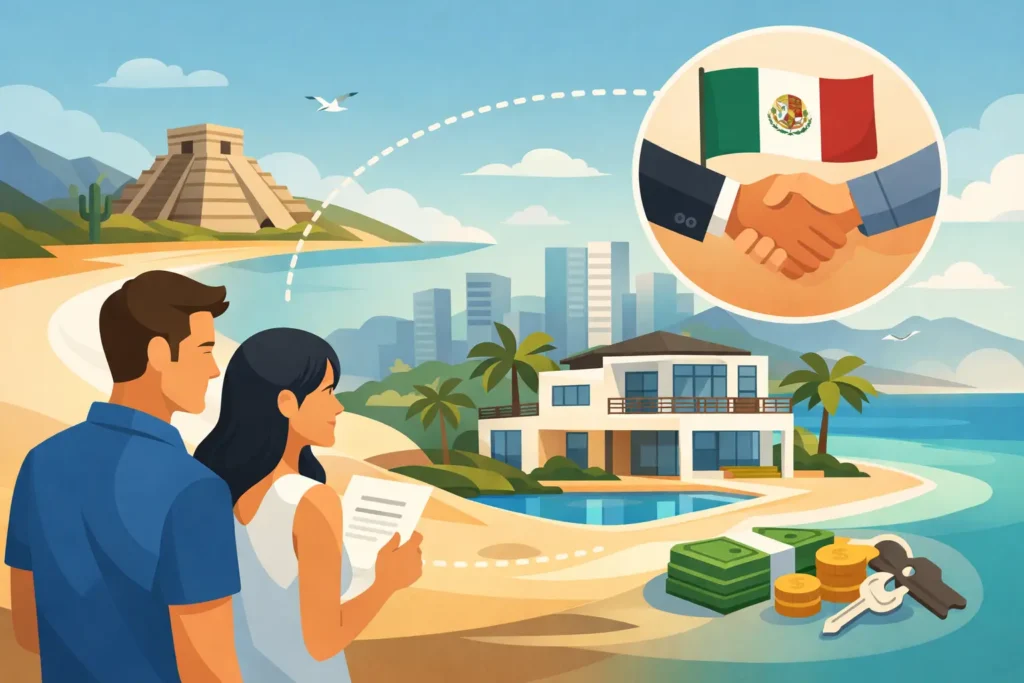
A sunrise over the Sea of Cortez, a golf cart ride to the beach, and a home you can return to whenever Cabo calls – that dream is far more attainable than many U.S. and Canadian buyers realize. Can foreigners buy property in Mexico? Yes. In Los Cabos, foreign buyers have been purchasing condominiums, villas, estates, and second homes for decades through a well-established legal structure designed specifically for coastal ownership.
The key is buying the right property, under the right ownership structure, with experienced local professionals who understand what must happen before you close. A Cabo home should feel exciting from the first showing through the day you arrive with the keys, not confusing because of unfamiliar paperwork.
Can Foreigners Buy Property in Mexico? Absolutely
Mexico welcomes foreign ownership, but its Constitution places special rules on property in the “restricted zone”: land within roughly 50 kilometers of the coast and 100 kilometers of an international border. Since Los Cabos sits on the southern tip of the Baja California peninsula, virtually every residential property buyers want is in this coastal zone.
That does not mean a foreigner cannot own there. It means a foreign buyer typically acquires residential property through a fideicomiso, commonly called a Mexican bank trust. This is the standard ownership vehicle for non-Mexican buyers purchasing homes, condos, and vacant residential land in Los Cabos.
A Mexican bank serves as trustee and holds legal title, while you are named as the beneficiary. As beneficiary, you retain the meaningful ownership rights: you may use the property, sell it, rent it, improve it, pass it to heirs, and name substitute beneficiaries. The trust is generally issued for 50 years and can be renewed.
A fideicomiso is not a timeshare, and it is not a short-term lease. It is a recognized, long-used method for foreign buyers to own residential real estate in Mexico’s most desirable coastal destinations. Palmilla, Pedregal, Cabo del Sol, Puerto Los Cabos, the Golden Corridor, Todos Santos, La Ribera, and the East Cape all have properties held successfully this way.
How Foreign Buyers Purchase a Home in Los Cabos
The transaction begins much like a purchase north of the border: identify the right property, make an offer, negotiate terms, complete due diligence, and close. The details matter because Mexican real estate follows its own procedures, timelines, and documents.
Start with the property and the community
Los Cabos is not one market. A beachfront Cabo San Lucas condo with strong vacation-rental potential is a different purchase from a private estate in Pedregal, a golf-oriented home in Palmilla, or a quieter retreat in San Jose del Cabo. Buyers looking toward La Ribera and the East Cape may find more space and a more laid-back setting, while buyers in the Golden Corridor often prioritize resort amenities, beach access, and proximity to both towns.
Before writing an offer, get clear about how you will use the home. Is it a family escape? A retirement residence? A part-time home that will generate rental income? Or a long-term investment with resale appeal? Your answer affects the ideal community, property type, HOA rules, furnishing budget, insurance needs, and management plan.
Make an offer with clear protections
A strong purchase offer should spell out price, deposit, closing date, included furnishings, contingencies, and the responsibilities of both buyer and seller. In Cabo, furnishings can be a meaningful part of a resale transaction, particularly with turnkey condos and vacation homes. Do not assume the staged home you toured includes every piece you saw.
Your offer should also give your legal and closing team time to verify the property’s title, trust status, permits, HOA standing, and any liens or outstanding obligations. A low price is not a bargain if the ownership history or paperwork cannot support a clean transfer.
Complete due diligence before funds are released
This is where local experience pays for itself. The closing process may involve a notario público, a Mexican legal professional with authority in real estate transfers, as well as a closing coordinator, trustee bank, and your own attorney or legal adviser. The notario’s role is important, but buyers should still seek independent legal guidance suited to their particular transaction.
Due diligence should confirm the seller’s authority to sell, the legal description and boundaries, title history, trust documents if applicable, tax status, and any recorded liens. For a condominium, review the condominium regime, HOA financials, monthly dues, special assessments, pet policies, and rental rules. For a home in a gated community, look at architectural regulations and any requirements that could affect a future remodel, pool project, or rental plan.
Be especially careful with ejido land. Ejido land is communal land and is not automatically suitable for a standard foreign residential purchase. Never rely on verbal assurances that a title issue will be handled later. A legitimate coastal property with a proper ownership path can be purchased confidently. A questionable one can become an expensive headache.
Close through the proper legal structure
If the property is already held in a fideicomiso, the trust can often be assigned to the new buyer or replaced, depending on the specifics of the transaction and bank requirements. If it is not, a new trust may be established. The relevant governmental authorization and trustee bank documentation must be in place before closing.
Funds are commonly handled through an established escrow arrangement or a carefully managed closing process. Buyers should understand where their deposit is held, when funds become nonrefundable, and what documents must be delivered before final funds are released. Avoid sending purchase money to an individual without written instructions, verified parties, and professional oversight.
Costs Foreign Buyers Should Plan For
The purchase price is only part of the investment. Closing costs vary based on property value, trust status, municipality, legal work, and other transaction details, so ask for a written estimate early. Buyers generally need to plan for acquisition tax, notary fees, registration costs, legal or closing fees, appraisal-related expenses when required, and fideicomiso setup or transfer costs.
After closing, a foreign owner should budget for annual property taxes, HOA dues where applicable, insurance, utilities, maintenance, trust fees, and property management. Mexico’s property taxes can be attractive compared with many U.S. markets, but a luxury villa’s operating costs can still be significant. Pool care, landscaping, air-conditioning maintenance, security, storm preparation, and staffing add up.
For rental properties, include professional photography, marketing, guest service, cleaning, repairs, and tax compliance in the numbers. Cabo can produce excellent rental demand, especially in locations close to beaches, marinas, golf, and resort amenities, but rental income is never automatic. Seasonality, property condition, pricing, community restrictions, and management quality all matter.
Should You Buy in Your Name or Through a Mexican Corporation?
For most foreign buyers purchasing a personal residence, vacation home, or rental-friendly second home in Los Cabos, a fideicomiso is the straightforward route. A Mexican corporation may be appropriate in certain commercial or business-use situations, particularly when ownership involves multiple investment properties or an operating business.
A corporation is not a shortcut around good due diligence, nor is it automatically the best choice for a single vacation condo. It has formation, accounting, reporting, and tax obligations that should be considered carefully with qualified Mexican legal and tax professionals. The right structure depends on your intended use, ownership group, estate planning goals, and tax situation on both sides of the border.
What U.S. and Canadian Buyers Often Miss
The best Cabo purchases are rarely made by choosing a listing from a distance and hoping the details work out. Community knowledge changes the decision. One side of a development may have better views, easier beach access, or more rental appeal. A beautiful unit may face construction activity, carry unusually high HOA dues, or have restrictions that do not fit your plans.
Financing deserves an early conversation too. Many Los Cabos transactions are cash purchases, although financing options may be available through Mexican lenders, specialized cross-border programs, developer financing, or other arrangements. Terms, down payments, and qualification standards can differ sharply from a conventional U.S. mortgage. Knowing your purchasing power before negotiating can make your offer more credible.
Ownership also needs a local plan. A vacant home in paradise still needs attention when you are back in Seattle, Dallas, Vancouver, or California. Reliable management protects the property, handles maintenance, prepares for arrivals, coordinates rentals if desired, and helps preserve resale value. This is one reason buyers often prefer a broker with real local roots and ongoing property-service capabilities, not simply someone who can open a door for a showing.
Los Cabos Real Estate has spent more than three decades helping buyers understand those on-the-ground differences, from a first Cabo condo to a legacy estate built for generations of family vacations.
The right first move is simple: define how you want to live in Cabo, establish a realistic all-in budget, and speak with a trusted local team before you fall in love with a listing. The sun will still be here. The best properties, especially those that truly fit your goals, do not always wait.
Pingback:How to Finance Mexico Property From the U.S. - Cabo Real Estate
Pingback:Fideicomiso Versus Corporation for Cabo Buyers - Cabo Real Estate