
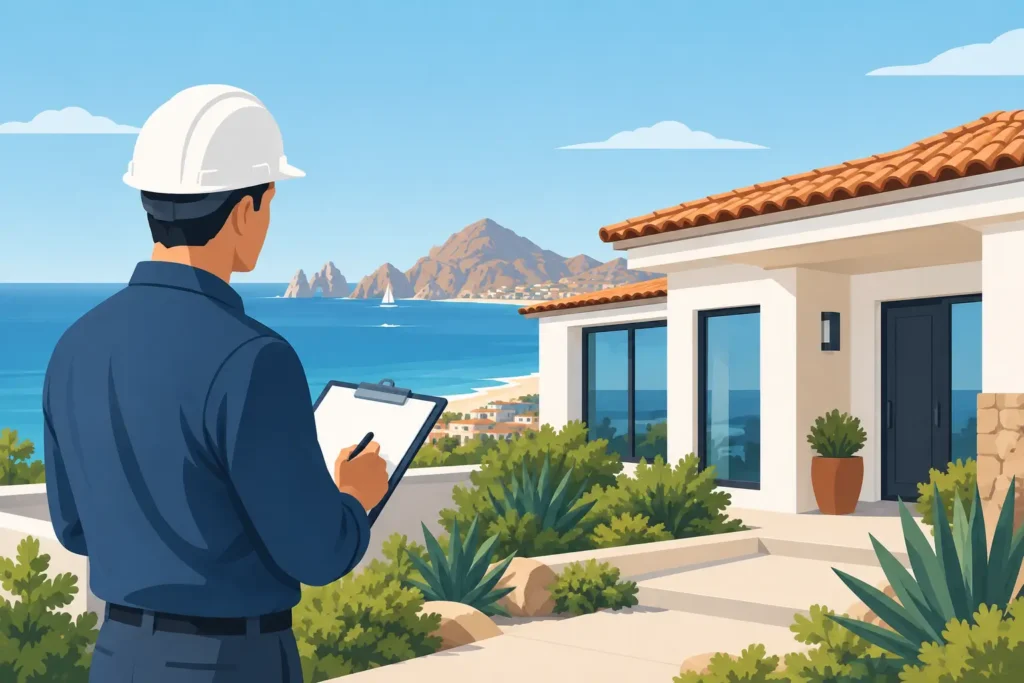
The ocean view may be flawless. The infinity pool may be sparkling. But before you fall in love with a villa in Palmilla or a beachfront condo near San Jose del Cabo, use this Cabo home inspection guide to look beyond the beautiful finishes. In Los Cabos, sun, salt air, seasonal rains, heat, and vacation-rental use can affect a property very differently than a home in the United States or Canada.
A professional inspection is not a reason to walk away from every imperfection. It is how smart buyers understand what they are buying, what repairs may cost, and whether the property truly fits their plans for personal use, rental income, or both. NOW is the time to buy the right Cabo property – not simply the prettiest one on showing day.
Cabo Home Inspection Guide: Start Before the Offer
The best inspection strategy starts before negotiations are complete. When you tour a home, villa, or condo, pay attention to the details that can be expensive to correct later: visible corrosion, water staining, unusually strong odors, cracked tile, aging air-conditioning equipment, and neglected outdoor areas.
Ask when the roof was last serviced, whether the property has had water intrusion during storms, and how often the owner has occupied the home. A lightly used second home may look pristine, yet systems can deteriorate when they are not regularly exercised and maintained. On the other hand, a busy vacation rental can produce strong income but may have more wear on appliances, furniture, pool equipment, doors, locks, and plumbing fixtures.
Before writing an offer, establish whether a qualified local inspector can access the property during your due-diligence period. This sounds basic, but it matters. Some gated communities require advance authorization, and occupied rental homes may need inspections scheduled between guest stays.
An experienced buyer’s broker can help coordinate the timing, but the inspector should remain independent. Their job is to identify conditions and risks, not to sell you the property.
Choose an Inspector Who Understands Coastal Baja Homes
Not every inspector who understands a suburban home in Arizona or California will automatically understand the conditions of Los Cabos. Coastal properties live in a demanding environment. Salt air accelerates corrosion, intense UV exposure wears down exterior surfaces, and humidity can affect enclosed areas even in a generally dry climate.
Look for an inspector with local experience evaluating the kind of property you are buying. A luxury villa with a pool, separate casita, water-storage systems, and multiple outdoor kitchens requires a different level of review than a lock-and-leave condo. If the home is in a more remote area, water supply, septic systems, road access, backup power, and internet infrastructure may deserve added attention.
Ask what the inspection includes and what it does not. General inspections often identify visible conditions, but specialized evaluations may be needed for pools, roofs, electrical systems, solar equipment, septic systems, structural questions, mold concerns, or major air-conditioning equipment. It depends on the age, location, and complexity of the property.
A detailed written report with photographs is especially valuable if you cannot attend in person. Still, if your schedule allows, attend the inspection. You will learn far more by walking the property with the inspector than by reading a report days later from home.
Focus on Water, Salt, Heat, and Storm Exposure
Los Cabos is paradise, but paradise has maintenance requirements. A home can be perfectly livable and still need a thoughtful plan for coastal upkeep.
Roofing and drainage
Roofs should be evaluated for membrane condition, flashing, drainage, ponding water, and evidence of past leaks. Flat roofs are common in the region and can perform well when maintained consistently. The concern is not that a roof is flat – it is whether the drainage design and maintenance history are adequate.
Inspect terraces, upper decks, scuppers, drains, and parapet walls. After heavy rain, water needs somewhere to go. Staining on ceilings, bubbling paint, swollen wood, or patched drywall can point to historic or ongoing moisture issues.
Corrosion and exterior finishes
Salt air can be tough on metal railings, window hardware, exterior lighting, gates, air-conditioning components, and pool equipment. Surface rust is not necessarily a deal breaker, particularly near the ocean. The question is whether corrosion is cosmetic, recurring, or severe enough to affect function and safety.
Stucco, exterior paint, sealants, and exposed wood also deserve close attention. Cabo’s sun can be relentless. A recently painted exterior may look excellent, but ask whether cracks were properly repaired and whether waterproofing work was completed beneath the fresh finish.
Air conditioning and ventilation
Air conditioning is a major comfort and operating-cost issue. Confirm the age, condition, service history, and capacity of each unit. Turn on systems where possible and ask whether all bedrooms, living areas, and casitas cool effectively.
A home that feels comfortable during a breezy winter showing may perform differently in late summer. Poor ventilation, undersized equipment, or deferred maintenance can turn a dream home into a costly project. For rental properties, reliable cooling is also essential to guest satisfaction and repeat bookings.
Check the Systems That Keep the House Running
A beautiful Cabo home is only as enjoyable as the systems behind the walls and beneath the landscaping. Request maintenance records when available, then match them against what the inspector sees on site.
Pay particular attention to the electrical panel, visible wiring, outlets near wet areas, water heaters, plumbing fixtures, water pressure, leaks, and shutoff valves. Homes may have cisterns, pressure pumps, filtration systems, water heaters, and other equipment unfamiliar to first-time buyers in Mexico. Ask who maintains each system and how often service is required.
For homes with pools, spas, fountains, or extensive irrigation, arrange a separate pool and equipment review if the general inspection does not cover it in depth. Pumps, heaters, filters, automation, plumbing lines, and finishes all affect future ownership costs. A pool can be a major part of the Cabo lifestyle – and a major maintenance item when neglected.
If the property uses solar panels, a generator, battery backup, or smart-home controls, verify ownership, warranties, service arrangements, and current operating condition. These features can add real value, but only if they are properly installed and supported.
Condo Buyers Need More Than a Unit Inspection
When buying a condominium, inspect the unit carefully, but do not stop there. Your lifestyle and investment are tied to the building and homeowners association.
Review available HOA financial information, reserve planning, current fees, insurance coverage, rules, planned assessments, rental restrictions, and recent maintenance work. A flawless unit in a building with deferred exterior repairs or weak reserves can become a surprise expense later.
During your visit, look at common areas with the same critical eye you use inside the condo. Check elevators, hallways, parking, roofs where accessible, pools, gym facilities, exterior paint, drainage, security infrastructure, and landscaping. Ask whether there have been recurring issues with leaks, water pressure, construction noise, or short-term rental activity.
For buyers who want rental income, HOA rules can directly affect occupancy, guest access, minimum stay requirements, and the ability to use a professional management company. Clarify those rules before you make a decision, not after closing.
Turn Inspection Findings Into a Better Negotiation
Nearly every inspection produces a list of findings. The goal is to separate normal maintenance from material risk. A worn sealant, missing screen, or aging faucet may be expected. Significant water intrusion, unsafe electrical conditions, major structural concerns, failing equipment, or serious corrosion call for a closer conversation.
Do not assume the seller must repair every item. In some transactions, a credit, price adjustment, or extended due-diligence period makes more sense. In others, the property’s location, view, rarity, and price may justify taking on manageable repairs. Great homes in Cabo are not always perfect, especially in established luxury communities where location is impossible to duplicate.
The key is to obtain realistic local estimates. A repair that seems simple from afar can require specialized parts, community approval, or contractor scheduling. Conversely, a concern that sounds dramatic in an inspection report may be routine maintenance for a qualified local technician.
Keep legal and title diligence separate from the physical inspection. An inspection evaluates the property’s condition. Your closing professionals should separately review ownership structure, permits, condominium documentation where applicable, taxes, and transaction requirements. Both tracks matter.
Los Cabos Real Estate has spent decades helping buyers see the difference between a cosmetic punch list and a property that deserves deeper investigation. The right local team helps you move quickly without skipping the questions that protect your purchase.
A Cabo home should give you more time in the sun, not more time worrying about what is behind the walls. Inspect carefully, price repairs honestly, and choose the property whose lifestyle, condition, and ownership costs feel right for the years ahead. See you in paradise.